
When a Perc Test Is Needed Before Building on Rural Property
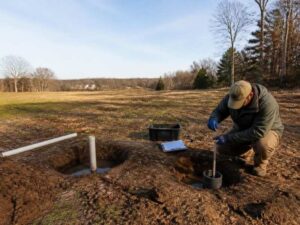
A perc test tells you if the soil on a rural lot can handle a septic system. It measures how fast water drains through the ground. In Alexandria and the wider region, most rural parcels have no public sewer line. So the land itself has to treat the waste, and a perc test proves it can. Skip this step, and you risk buying a lot you cannot legally build on. This guide covers when you need one and what to expect.
What a Perc Test Actually Measures
Perc is short for percolation. The test checks how quickly water soaks into the soil. A crew digs one or more holes to a set depth. They fill each hole with water and time how fast the level drops.
That drain rate decides a lot. Fast-draining soil, like sandy loam, usually passes. Heavy clay drains slowly and often fails. If water sits in the hole for hours, the soil cannot filter septic waste well. The health department uses these numbers to approve or reject a septic design.
When a Perc Test Is Required
You need a perc test any time a property will use a septic system instead of public sewer. That covers most rural building projects. Here are the common triggers:
- Building a new home on raw land with no sewer access
- Adding a second dwelling or an ADU with its own septic
- Splitting a large parcel into smaller buildable lots
- Replacing a failed septic system on an older property
Local health rules drive the requirement. In Virginia, the health department reviews soil and site conditions before it issues a septic permit. No passing soil evaluation usually means no permit. And no permit means no legal build.
Why Buyers Should Test Before They Purchase
Here is a hard truth. A cheap rural lot with no perc approval may be worthless for building. The soil controls the value. Bad soil can turn a dream homesite into a dead end.
Smart buyers make the sale depend on a passing test. You write a perc contingency into the purchase contract. If the soil fails, you walk away and keep your deposit. This one step has saved many buyers from a costly mistake.
Timing matters too. Some soils test differently by season. A high water table in spring can fail a lot that looked fine in summer. Ask your soil evaluator about the best time to test in your area.
What Happens When a Lot Fails
A failed perc test is not always the end. It just closes the door on a standard septic system. You still have options, though they cost more.
An engineered or alternative septic system can work on tough soil. These designs use pumps, sand filters or mounds to treat waste above poor ground. They carry a higher price and more upkeep. Still, they can make a hard lot buildable.
Sometimes you can test a different spot on the same parcel. Soil can change across a few hundred feet. A good evaluator will look for the best drainage field location before calling the lot a loss.
Questions to Ask Before You Test
- How many test holes will you dig, and where?
- Will you check the seasonal water table?
- What septic design does the soil support?
- What are my options if the primary spot fails?
How the Perc Test Fits With Your Survey
A perc test and a land survey work together on rural builds. The survey shows your exact boundaries, setbacks and site features. The perc test shows where waste can safely drain. You need both to place a home correctly.
Septic rules require space. The drain field must sit a set distance from wells, streams, property lines and the house. A boundary and site survey confirms you have room for all of it. Order them early, and you avoid redrawing your plans later.
Steps to Take Before You Build
Start with the health department. Learn the local septic and soil rules for the parcel. Then hire a licensed soil evaluator or engineer to run the test. Keep the written results, because lenders and permit offices will ask for them.
Match your build plan to the soil. If the lot needs an engineered system, budget for it now. Line up your survey so the home, well and drain field all fit with proper spacing. A little planning here saves big money and delays down the road.
Frequently Asked Questions
How long does a perc test take?
The field work often takes a few hours to a full day. The digging and timing happen on site. But the full process can run longer once you add scheduling and health department review. Wet soil may also require a return visit, so ask your evaluator for a clear timeline up front.
How much does a perc test cost?
Prices vary by location, lot size, and soil complexity. A simple test on an easy lot costs less than one needing many holes. Alternative system evaluations run higher. Get a written quote before work starts, and confirm what the fee includes so there are no surprises later.
Can a lot pass a perc test and still have problems?
Yes, a passing test only covers soil drainage. It does not check your boundaries, flood risk, or setback space. You may still need a survey and other site reviews. Treat the perc test as one piece of your due diligence, not the final word on whether you can build.
Does a perc test expire?
It can, depending on local rules. Some health departments accept old results for years, while others want a fresh test after a set time. Rules also change over the years. Always confirm with the local health office before relying on an older perc result for a new project.
Who performs a perc test?
A licensed soil evaluator, engineer, or health department staff usually handles it. The exact requirement depends on your state and county. In many areas, a private evaluator performs the field work and the health department reviews it. Ask locally to confirm who must approve your soil report.
For a free land surveying quote, call us at (571) 200-5708 or send us a message by going here.
Posted in land surveying, land surveyor | Tagged Land Surveying
