
Planning Landscape Work? Find Your Property Line Markers
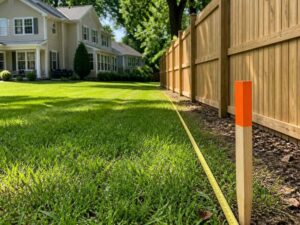
Before you plant a hedge, build a wall, or lay a patio along the edge of your yard, find your property line markers. Landscaping mistakes near the boundary are common, and they’re rarely cheap to undo. Plants get dug out, walls come down, and friendly neighbors stop waving.
Those small pins and monuments mark your lot corners, and they guide every project close to the boundary. Locating them first is the easiest way to avoid a costly redo or a dispute next door. Spend an afternoon looking for them, and call a surveyor if the evidence doesn’t add up.
Why Property Line Markers Matter Before Landscaping Begins
Most landscaping happens near the edges of a lot. That’s where people plant privacy hedges, build retaining walls, install fences, and add drainage. Every one of those projects depends on knowing exactly where your yard ends.
Guessing from a fence or a mowing strip is risky. Old fences often sit off the true line, sometimes by several feet. A neighbor’s tree, a shared driveway, or a past owner’s shortcut can all make the boundary look like it’s somewhere it isn’t.
Markers protect you later too. If a dispute ever comes up, surveyed corners give everyone a clear starting point. Landscaping that respects them is far easier to defend than work based on a hunch.
Locating Existing Property Markers Around Your Yard
Start with paperwork. Pull out your plat or any past survey from your closing documents, since it shows where corners were set and what kind of markers were used. Many plats also list the distances between corners, which helps you measure from one you’ve already found.
Then head outside. Property line markers are usually iron rods or pipes driven into the ground, often topped with a plastic cap stamped with a surveyor’s license number. Some lots have concrete monuments, drill holes in sidewalks, or nails in pavement instead.
Look near the corners shown on the plat, along curbs, and by the edges of driveways. Markers are often buried a few inches under soil, mulch, or grass. Dig gently with a hand trowel, and call 811 before you go any deeper so buried utilities get marked first.
Checking Landscaping Plans Against Property Boundaries
Once you’ve found the markers, compare them to your design. Run a string line between two corners to see where the boundary falls on the ground. Then measure from that line to where you plan to put beds, trees, walls, or a patio.
Leave room for growth. A shrub planted right on the line will spread across it in a few seasons. Tree roots and branches can reach a neighbor’s yard and cause trouble with their foundation, driveway, or fence.
Check the other limits on your lot as well. Your plat may show easements for utilities or drainage, and fence or wall setbacks may apply depending on your city, county, or HOA. Confirm those rules before you buy a single bag of mulch.
Protecting Survey Markers During Excavation and Grading
Landscaping equipment wipes out survey markers all the time. A skid steer can bend a pin in one pass, and a regrading job can bury it under a foot of new soil. Once a marker is gone, replacing it means paying a surveyor to set a new one.
Flag each pin with a bright marker or stake before work begins. Show every one to your landscaper and ask the crew to work around them. If grading will change the ground level, have a surveyor set reference points nearby so the corner can be found again.
Put marker protection in writing. Spell out in your landscaping contract who pays if property line markers are damaged during the job. A clear agreement up front keeps the conversation short if something goes wrong.
When to Hire a Land Surveyor to Verify Property Lines
Some situations call for a professional. Hire a land surveyor if you can’t find the markers, if they don’t match your plat, or if you’re building something permanent near the line. Fences, walls, and patios are expensive to move once they’re in place.
A surveyor can find existing markers, reset missing ones, and stake the line so you know exactly where to build. They can also point out easements or encroachments that might change your plans. Some fence or wall permits may call for a survey, though rules vary by locality and project type.
Book the survey well before the landscaper’s start date. Surveyors can get booked up during spring and summer. Confirming the line first keeps the whole project on schedule.
Frequently Asked Questions
How can I find my property line markers before landscaping?
Start with your plat or past survey, which shows where the corners should be. Measure from a known point, like a found corner or the edge of the street, to estimate each spot. Search carefully with a hand trowel or metal detector for iron rods, capped pins, or concrete monuments a few inches down. Call 811 before you dig any deeper.
Are property line markers always located at the corners of a lot?
No, markers aren’t always at the corners. Surveyors also set them at bends in the line, at the start and end of curves, and along long boundaries. Sometimes a marker is set a short distance off the corner when the true spot falls inside a wall or tree. That offset should be noted on your survey.
Can I use a metal detector to locate property survey pins?
Yes, a metal detector often works because most survey pins are iron or steel. Surveyors use magnetic locators built for this job, which tend to be more reliable. Not every marker is metal, and some sit too deep or near other metal that confuses the signal. A beep also doesn’t prove you’ve found a pin, since buried pipes and debris can set it off.
What should I do if I cannot find my property line markers?
If you can’t find your property line markers, don’t guess where the line is. They may be buried deeper, covered by pavement, or removed during past work. A licensed surveyor can search with better equipment and reset any that are missing. That’s the safest step before building anything permanent near the boundary.
Is it legal to remove or move property survey markers during landscaping?
You shouldn’t remove or move a survey marker on your own. In many states, disturbing a boundary marker on purpose can break the law, and you could be on the hook for the cost of resetting it. Rules vary by state and locality, so check with a surveyor or attorney if a marker is in your way. A surveyor can often set a reference point so the corner isn’t lost.
For a free land surveying quote, call us at (571) 200-5708 or send us a message by going here.
Posted in boundary survey | Tagged boundary survey
