
Why Commercial Redevelopment Projects Begin With Updated ALTA Survey Information
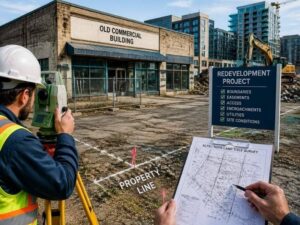
A commercial redevelopment usually opens with an updated ALTA survey, because changing how a site is used demands a clear read on what’s already there. Buyers and owners planning to reshape a property need current data on boundaries, easements and improvements before they invest in design. Old records often miss the changes a site has gathered over the years. So the survey sets an accurate baseline that the whole redevelopment builds from.
Redevelopment reworks a site rather than leaving it as is, which raises the stakes on every detail. A hidden encroachment or a forgotten easement can reshape a plan or a budget overnight. Current survey information brings those details into the open before decisions are locked in, and that early view can save a project from an expensive reversal.
Redevelopment Requires a Clear Picture of Existing Conditions
Before changing a property’s use, an owner needs to know precisely what the site holds today. That means current boundaries, existing structures, access points and any recorded rights tied to the land. A plan drawn without that picture rests on shaky ground, and shaky ground shows up fast once construction starts.
An updated ALTA survey delivers that clear view in a single document. It shows the site as it stands, so the design team starts from fact rather than assumption. That accurate base keeps the redevelopment from stumbling over surprises that could have been spotted at the outset.
A clear baseline also gives every later change something to measure against. As the design grows, the team can check each idea against the true site instead of an old memory of it. That steady reference keeps the plan honest through every revision, which matters when several people shape it at once.
ALTA Survey Information Helps Identify Title and Site Constraints
An ALTA survey brings together the legal record and the physical site in one place. That pairing reveals the constraints that could shape or block a redevelopment. Spotting them early lets the team plan around them instead of around a costly surprise later.
An ALTA survey can flag constraints such as:
- Easements that reserve parts of the site for other uses
- Access rights that limit how the property connects to roads
- Encroachments where a structure crosses a boundary
- Utilities that run through areas slated for new work
Older Commercial Sites Often Carry Hidden Property Issues
A commercial property that has stood for decades tends to hide issues the paperwork never caught. A neighbor’s fence may cross the line, or an old easement may still bind land the owner forgot about. Those issues stay quiet until a redevelopment stirs them up, and by then the pressure to fix them fast is high.
An updated survey brings the hidden problems to the surface while there’s still time to act. The team can then address each one before it derails the plan. Facing them early costs far less than discovering them mid-project, when crews are already on site and the clock is running.
The cost of a late discovery climbs with the size of the project. A small overlap on a house is a minor fix, but the same problem on a commercial redevelopment can stall permits and financing together. An updated survey shrinks that risk by putting the hard facts on the table before anyone commits.
Updated Survey Data Supports Planning, Financing and Due Diligence
Redevelopment draws in many players, and each one leans on the same survey data. Investors weigh the site’s potential, lenders assess the risk and attorneys check the legal record. Designers use the layout to shape the new plan around what the site can actually hold.
Accurate survey information keeps all of those efforts aligned. Everyone works from one trusted source instead of conflicting assumptions. That shared foundation smooths the planning, the financing and the due diligence alike, so the project moves as one instead of pulling in different directions.
Why ALTA Review Should Happen Before Major Redevelopment Decisions
The findings in an ALTA survey can shift the cost, design and timing of a redevelopment. An encroachment or an access problem discovered late can force a redesign or delay a closing. Reviewing the survey before big decisions keeps those shocks off the table, where they can’t blow up a budget.
Owners who study the survey up front make choices grounded in real conditions. The plan, the budget and the schedule then reflect the site as it truly is. That early review protects the project from expensive reversals later, and it lets everyone commit with their eyes open.
A careful review at this stage also strengthens the owner’s hand in negotiations. When the survey confirms a clean site, a buyer can move with confidence and speed. When it turns out to be a problem, that same buyer can ask for a price change or a repair before signing, rather than absorbing the cost afterward.
Frequently Asked Questions
Why is an updated ALTA survey important for redevelopment?
It shows the current site conditions and the title-related issues that shape what an owner can do. Starting with that accurate baseline keeps a redevelopment from running into hidden problems.
Who uses ALTA survey information in redevelopment?
Buyers, owners, lenders, attorneys, engineers, architects and title companies all rely on it. Each one draws on the same data to plan, finance and approve the project.
What can an ALTA survey reveal before redevelopment?
It can surface easements, access limits, encroachments, existing improvements and boundary concerns. Knowing those details up front lets the team design and budget around them.
For a free land surveying quote, call us at (571) 200-5708 or send us a message by going here.
Posted in ALTA Survey